
Wild @ Heart
Two ageing lovers put aside a portion of paradise, creating their own country while the planet rots -- though of course, nothing is easy. In fact, some things are life-or-death difficult...

Speculative fiction
by Michael Botur
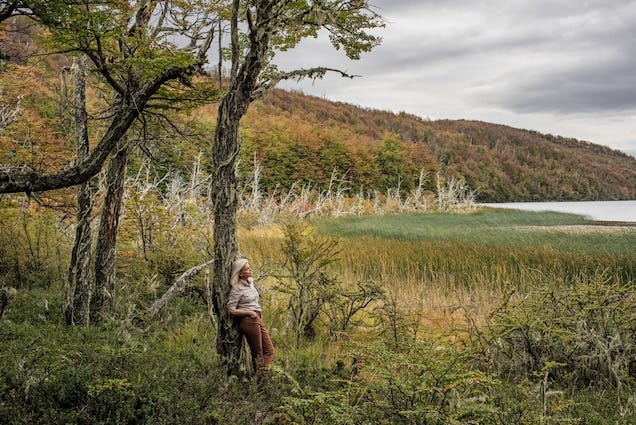
It’s January, a sizzling Saturday. We’re wrestling rubbish out the side of a cliff above the glittering Pauanui marina where many of us have boats parked, handing black bags stuffed with nappies and Big Mac boxes in a human chain down to a skip, planting baby natives in each hole we pull trash out of. My bra strap trickles dusty sweat and there is spiderweb in our hair and we’re pestered by wasps, but the dirt feels good under my purple nails and we all know we’ll be back in our suits soon.
These businesspeople and I, we’re doing this litter clean-up for a Sunday photo op, keen to let anyone reading our companies’ annual reports know we’ve come to contribute Corporate Social Responsibility with big pretentious capital letters.
It is Richard Lu, the unimpressed-looking founder of K2Klothing, who has gathered us, emailing round the Exporters’ Association. Richard is equally revenue-focused as the rest of us – he just feels the guilt more.
Richard’s our leader this morning, dressed in a high-vis vest, sunhat, K2 boots. Muscles flex under his shorts as he straddles the slope. You’d think he would put on a flashy-smile display; instead, Richard looks down with a black glare from the steepest parts of the slope, impatience coming through in the speed with which he works, wiping his frowning fortysomething brow, grumpily planting kauri seedlings “the correct way,” muttering little critiques of our gardening gear. Richard has this tug-of-war thing with K2. He wants every item of outdoor gear his company sells to last 50 years into the future; his board wants items made in Macau to return profits today, and The Board always wins. Richard hates unethical goods and any people who sell them. This includes the Warehouse guy to my right, the BP lady, the Hallenstein brothers. My company’s on Richard’s shit list too. Fiordlandwear flies in textiles from Guangzhou for $20 a kilogram. Every kilo, we upsell for $450. The dyes that turn the Pearl River purple are not our problem. Like everyone here, I stuff toxic shit into a crowded world, collect a six-figure salary and buy the guilt away with occasional planting and volunteering.
At 11am, the K2Klothing Kommunity Kleenup™ is complete and the world is saved and Richard grumbles thanks, unsmiling. Fuck off back to your catamarans, his eyes say. The executives crick their spines and high-five and pose for the Herald and fetch their phones from big black cases.
Richard trudges to the bottom of the slope carrying one last baby puriri and shoves it into my chest. He opens a hole with his spade. I begin burying the sapling and he crouches, scooping soil, taking over.
Our knuckles touch.
‘That’s your penance,’ Richard says, snorting at his own little joke, lifting up his t-shirt and dabbing his brow. I spy his rocky stomach, hard and starving. ‘Go join the phonies. You don’t have to pretend to care.’
‘I’m not pretending.’
Richard’s eyes drill into me, then he trudges down the slope, glancing over his shoulder to see if I’ll follow.
‘Buy me a coffee then,’ he calls, ‘Convince me.’
We sip and nibble in armchairs in front of a stone fireplace at the Pauanui Yacht Club. We’re nearly 50, lives mostly-complete and structured irreversibly. We don’t spark, though we don’t separate, either. I like the challenge of trying to make the prick smile.
I once read in a Forbes profile that Richard has exhausted three wives. Probably hasn’t fucked in years.
‘So you haven’t really asked me who I work for, why I got invited to your thing,’ I tell Richard.
‘Very well. Jennifer Tualamali’i, I believe is the pronunciation. 3IC at Fiordlandwear, Director of Marketing, key shareholder. Youuuu consider yourself “adventurous”, according to the Listener. Let’s see… Store-sharing deals with Rebel, Farmers, Glassons, PostiePlus. Faux-outdoor garments; mock-alpine displays in your shops. Fake snow, stuffed kea, ho-hum. Clothing with which people can pretend they’re outdoorsy while not doing anything actual for the environment. Aaaand you’ve just expanded into Australia which makes you and your shareholders even wealthier, hurrah.’
I’m blinking now. No wonder three wives left this arsehole.
‘More fast fashion. More bins stuffed with plastic-based fabrics. Stop me if I’m wrong.’
‘Same for you, though, right? Your company made 97 mil last year. And your stake’s, what, 22 percent? There’s a word for that. Starts with hippo.’
‘It’s not… what it looks like.’ He leans forward into a secretive huddle. ‘I’m growing my money, big-time. Then when I’ve got enough… .’ He looks around the tables. ‘Don’t know why I’m telling you this.’
‘Cause I can tell if people are full of shit. And you don’t want that to be you.’
He hunkers deeper. ‘Everything we achieved this morning, Jen – nothing but an ambulance at the bottom of the cliff.’
‘Actually, we were near the top,’ I tell him with a wink.
He doesn’t find my joke funny, doesn’t think my wink alluring.
He stays, though, and our 30-minute coffee swirls into hours, our brains like two snapping beasts that end up humping. More coffees, then Chablis; a pizza at the two-hour mark, a cheese platter at 3.5 hours, more wine. We talk riparian planting, permaculture, non-dig techniques, native orchids, rewilding Siberian mammoths. Richard raves about flying Cessnas, gliders, rock climbing. He loves getting away from the office where his chess-moves mean millions. He says on his birthday this year, he’ll treat himself to a new BKC Pedal Drive Pro kayak and paddle round Vancouver Island. It’s a tandem, but Richard’s used to doing life by himself.
‘What do you get for the man who has everything?’ I nervously joke.
Richard doesn’t waste a second on laughter. ‘Buy me the moon so I can keep footprints off it,’ he says. ‘Buy me Antarctica, Greenland, the Chathams. These little clean-ups, Jen. They don’t make a dent. Not while the global population’s hitting nine billion. You aware of this? You following me?’
So long as you lead, I want to scream.
By 4 o’clock, the staff are stacking chairs, sweeping. Get a room, their glares say. We both have to fly back to our homes – me Northcote, Richard: Johnsonville. I’ve tried to do my half of the talking, but Richard is a flash flood sweeping down a hill. The only option is to go in his direction.
He moves to the door, puts on impenetrable black aviators.
‘What I wanna work towards is stopping cities, a complete ban on urban expansion. Portion off a meaningful piece of the world. Restore it, completely pristine.’
‘You mean a park?’
‘Bigger,’ he goes. ‘A national park. Or more. Box off a whole country.’
He lowers his glasses, looks at me hard. Tells me I’m the first person not to have laughed. Gives me his business card. Crosses out the email address. Writes his personal email. Wild@heart.
**
Each time we meet, Richard has fewer days left to fulfil his missions. As K2 expands in the Northern Hemisphere, his shares make him worth thousands more each day, though his impatience increases at the same rate. He works in fifth gear, shouting at underlings, sacking managers, churning through C-suites who don’t give him the results K2 needs, forcing dangerous holidays in between quarterly reports. He kayaks Canada, climbs Erebus, sails to Samoa, coming back after and saying “Sorry, I would’ve taken you, but… .” Insert excuse.
Richard hates being alone, though he hates people, though he hates being alone, and so on. He won’t admit any of it. I squeeze his stiff shoulders, rub kawakawa into his naked neck. I call him on his bullshit. He stays silent.
The more successful K2’s expansion, the more he compensates by wrestling with the world, getting his board to sign off on risky, ruthless moves. Big buy-outs, gobbling up competitors. Torrents of revenue. Huge loans, billion-dollar decisions. Deals in Denmark, Dresden, Dubai.
Richard’s board and buildings are in Wellington while my company’s headquarters are in Auckland. Across two years, our dates occur in random spots. Fay and Richwhite’s islands, my compound in Wanaka, Richard’s resort atop Ruapehu. Three-day weekends together, then three months apart. Sex over the phone. Hearts wild and windy as cyclones.
Feb the next year, we’re bobbing in Halfmoon Bay when Richard announces he’s got a plan for me. Sudden decisions after months of meditation are how his brain works. A fed-up whistleblower told the NBR recently that Richard is autistic, but it’s not that. Richard just does what his conscience tells him. Inspiration blows across like mountain weather.
‘So you’re on track to become chief exec, Jen, stop me if I’m wrong,’ Richard announces. ‘After which you’ll resign? And you’ll sell your shares? And come work conservation full-time?’
Richard rises as if the plans are finalised, pulls the outboard motor cord, ready to return to the mainland and confront the world.
I don’t disagree with what he’s suggesting for my career at all. I’m COO now, second in charge, and 100 percent dedicated to bringing the best to my company. The thing is, I’m 110 percent dedicated to something else.
At 3am, on the windy balcony of our lodge, I spread my fingers across Stewart Island. The Milky Way glows overhead, violet dust on black.
You could purchase most of this place, with the right backers, I tell him. Make one of those dark sky sanctuaries. Island’s 80 percent conservation, anyway. Buy up the remnant farms, you’ll have uninterrupted wildlife corridors. If not here, why not the Barrier? Kapiti, even?
Borrow a couple billion, I continue, squeezing in words in a rare lull in Richard’s endless battle-speech. Nothing goes up in value as steadily as land, I remind him. Private equities will recognise that.
‘Thaaaat’s... .’ He waggles a finger, trying to find fault. By the time the night wind drives us back inside, he still doesn’t have a rebuttal.
Next morning, Richard gets his numbers sent through to the pub-hotel down by the dock. Richard’s got just under forty million to play with. Not enough to buy the national park he dreams of, but maybe enough to get lenders’ attention if K2 goes public, caps out and he sells his shares.
As we buckle into our seats on the K2 company jet, bouncing toward take-off, I tell him if his world-changing conservation concept derails our lives, then okay. I need to get out of the office. I’m down for whatever.
I also tell him three marriages is enough and this time, it’s till death do us part.
**
Growing our companies is like riding a volcano. Exhilarating acquisitions, dangerous debt, toxic politics. We make deals with power-brokers we hate, we disappoint unions, our companies fight each other for shelf space in Sydney and San Fran, we get haloed or hated in Time or Der Spiegel. If we don’t expand, our numbers could flip any day and bury us. We lease Bangkok and Hanoi factories and scour the planet for affordable workers to lower manufacturing costs. We take jobs away from my people in Porirua and sell our garments back to upper-middle-class Kiwis for as much as we can, convincing customers that wearing boots approved by Edmund Hillary’s grandkids means something special. In Doha and Denver and Dublin they buy our gear with the promise we’ll transport them to the Alps, plus a dollar from every purchase goes to keeping kākāpō breeding. Just having K2 on your collar or Fiordland on your hood makes you imagine you’re part of nature while you stay in your smoggy city.
K2 pours 42 mil into Winter Olympics marketing, gets $102m back; my company dresses reporters at the Colorado X-Games and we enter a thousand store windows in American malls.
On Friday afternoons, Richard abandons his mobile phone, helicopters into New Zealand’s national parks, puts himself at the mercy of rivers and cliffs and twisted ankles. Occasionally he remembers to invite me. His glider lands violently beside Lake Taupō; his fancy double kayak tips on Whanganui River rapids without me in the back to balance. We’re mid-Fifties and I’m worrying about injuries and chills, while Richard seems determined to play toreador till he dies. He doesn’t fear dying in the wild – he just resents death for interrupting his plans.
As our salaries fatten, we donate to Tiritiri Matangi Island sanctuary, to the World Wildlife Fund, to the Fiordlandwear Chatham Islands Black Robin Recovery™. Saving a few birds is meaningless though, it turns out. Drops in the ocean.
‘You’re right about buying a major chunk of land,’ Richard says one night, rolling off me mid-sex, deflating, overcome with thought. ‘It’ll need to be maximum value for dollar. Not hectares. Square kays. Serious land.’
Over the next two years, wherever he is in the world, from hotels in Hamburg to trains in Tirolo, Richard sends me the business cards of vast Californian and Japanese and South African private equity firms.
HOLD ONTO THESE, he orders. FOREST LAND+CARBON CREDITS=SKYROCKETING VALUE. WE JUST NEED 2 FRONT A HUNDRED MIL BUY-IN FOR INVESTORS.
When Richard arrives home, we plan our wedding and lay down a gauntlet: all our guests are urged to gift $1,000,000 each into our Dome Valley Forest Regeneration Trust. Rich listers only – it separates philanthropists from misanthro-piss-takers, Richard jokes. You get a forest named after you, for fuck’s sakes.
We’re buying up the land so we can stop it being built on, we explain to the Times and The Guardian and the Beeb. We’re secretly delighted most of our friends politely decline, leaving us with no wedding guests, no bouquet and no one asking why we ditch the Waiheke winery and go up to the poor north for a quieter weekend.
At a bend-in-the-road pub, minutes from some lake called Omapere, Rātana minister and farm veterinarian Henare Marsden marries us in the garden bar of the Okaihau Hotel. There’s a baby rata growing in rotting leaves in an old barrel. Richard can’t stop staring at it, and the moss, and the taraire trees darkening the toilet, and the Hundertwasser bus stop and the Waima Forest on the edge the hill, poised like a million stiff soldiers.
It’s green here. Green bending over every hill till you hit the ocean on either side. This is the place.
We have to keep outsiders out.
October, we cycle along a railway line and buy roadside lunch at Ngawha where Uncle Stan The Caravan Hangi Man tells us the milk price per litre Fonterra’s paying is ‘ratshit.’
We chew and listen. ‘Land’s about the only thing that’s worth anything, and halfa that’s fenced off by blooming DOC,’ Uncle Stan complains, spitting into a non-recyclable foam cup.
Richard and I study Pete’s farm. It’s half-grown over, totara trees racing against gorse.
We’re not thinking Pete should tackle the weeds. Sell now, leave the farm full-stop, we tell him. Let the trees take over.
‘Oh yeah?’ Pete goes, cautious, ‘Who’s buying? Yous two? Cause farms prices is shit.’
Shit prices are good for us.
When we get back to our room above the pub, Richard hovers over our half-set-up game of Monopoly, snorts, takes his laptop into the bathroom and asks the private equity people to support him to piece together an eighteen-hundred-million-dollar acquisition of every farm on the Northland-Auckland border, coast to coast. Every. Farm. And that’s just the start, he explains. Property here’s the cheapest in the country. Get the land now, while it’s affordable. Population’s nearing ten billion. Land is the only asset that’ll always rise in value.
‘Three words,’ he tells them. ‘Carbon. Offsetting. Credits. You’re looking at a once-in-a-lifetime opportunity to buy credits while they’re cheap, sell ‘em as they rise. Plus we have the Billion Trees Programme going on. Government needs a place to plant. We’ll put aside all the land they could ask for.’
The lenders listen.
This is happening.
**
Wild@Heart is what we register our company as. It’s catchy, quick, impatient; supposed to get people’s attention. A passionate name to impress two hundred thousand people as we tell them we’ve come to purchase their property and politely push them off.
Truth be told, this Wild@Heart thing’s partly about bridging the inside with the outside. Wild for the outdoors; @ for the digital indoors. Rugged Richard, jellyfish Jen. I take things slower and I plan on living to 100. Richard has no plan. His life is a sparkler, burning towards his fingertips. He won’t drop it till it hurts him.
Wild@Heart is run from the huge house we build atop the Brynderwyn hills on the Northland-Auckland border.
The project fails immediately – almost.
At our first public meeting, at the Pehiaweri Marae, when we tell the locals our conservation covenants are all about helping them, we’re booed until I drip tears onto the lectern, burning.
These people don’t move for money. They move for meaning.
As outsiders, we need local leverage. The government gives us a minister who reads our pitch deck, rewrites the documents, takes out the wankiness, adds local lingo, and lets everyone know we’re here to repair Papatūānuku. Tama Potaka is his name. The Minister comes with Māori roots, cousin-connections, homeboy handshakes and hongi. He talks a lot with eyebrows and chin. He’s cousins with Uncle Pete. In the misty kitchen of his nana’s crowded state house in Kawakawa, where sausage rolls are stacked like logs and tea is boiled in a 30-litre urn, Tama introduces us to his dad, his nephews, his daughter’s daughters, rummaging in his brain for the right reo before launching into long introductions while kaumatua look me up and down like I’m a used car.
A wrinkled kuia in the corner jabs me with her stick. We have to bend by her lips to understand what she’s telling us.
‘Put it back how it was,’ she grunts. The party has stopped, all around us, the music paused. ‘The land.’
Everyone’s listening.
We tell her we’ll try.
Tama explains his government’s position while we munch frybread at a Rawene food truck.
The Ministry is obligated to make sure 10 percent of the country is in conservation land at all times, he explains, sucking butter off his fingers. Each time we secure another hundred hectares, the government can release land for a mine near Milford or new gas drilling. ‘No Build’ up north means ‘Go Ahead’ down south. These private investments – they balance the books. If the country’s quota of preserved land happens to be one unified chunk instead of fragmented forests, no problem. We’re finally winning.
Preaching at the Waimamaku Arms, the Dargaville Town Hall, the Top Ten Motel at Donnelly’s Crossing, I tell arms-folded audiences in Bob Marley beanies and ugg boots that the local economy will always struggle and they may as well cash out. There will never be another opportunity to get half a million bucks for walking away. Plus, the power and water will be cut off in a year or two. Please, folks – go home tonight and tell ten people. Take a prospectus. GX Capital and CarlyleGlobal are putting up $19bn and $12bn respectively to purchase almost every building, every block, farm, forest, factory. 38,000 shops, petrol stations, quarries, boat berths.
60 churches are approved to remain after we close the region, servicing the few thousand scattered remnants approved to live in the park. On a farm on the edge of the Mangamukas a toothless man creases and uncreases the contract I’ve pushed into his hands. Tells me the contract “Better not be another fuckin treaty.” Makes me promise the kauri tree with his wife’s whenua under it will be left alone.
It’ll all be left alone, I promise him.
Every plant. Every placenta.
Ōmapere, Opononi, Omanaia; Kaikohe, Kaitaia, Cooper’s Beach. Sales snowball.
After the tide turns in the town hall at Maungaturoto, 110,000 residents left to persuade. After the Ngunguru Cricket Club and the Tōwai Tavern, 89,000 to go. Our message makes people listen. Money makes them tear up their roots.
Vestiges of Ngāti Kuri and Te Rarawa are left self-sufficient in the Muriwhenua; Ngatiwai build a bastion on Whangarei Heads. Hamlets of hardcore hippies hang on as lichen grows over their caravans and moss covers the street-signs and one by one, water pipes lose their pressure.
Apart from them, we buy everything else unprotected, with the Crown calling in its 99-year leases and citing covenants from the King.
The lenders love it. Buying out 80,000 homeowners costs $52,000,000,000 across five years, 867 million a month, big digits, but we’ve straddled such numbers before. The world is crowded, land values soar and soar, and lenders know the government will pay a trillion bucks in the future to buy back the province and build on it again.
A couple years on, we’ve almost purged the peninsula, managing land-buyers and lawyers and a thousand engineers who disconnect power lines and cut cables and put an electric fence along the border as the Defence Force blocks the highway with concrete cubes.
Richard used to seal himself inside his skull. Now he seals himself inside Northland. Always in the bush, on the water, on the road, somehow more energetic even as we enter our 60s, spending as much time surveying our country as he can. He’s out there filing reports for our shareholders. Making up numbers about the values of trees and valleys they can bank on. He comes home after a good month, raving about buying out Auckland as well, after this, or the whole North Island, even. Babbling like he’s been at a Baptist church and come home saved.
Richard disappears again with tools, a tent, powdered meals and a satellite phone, paddling his kayak across stained lakes and rain-brown rivers, taking samples, capturing contamination data. Richard grins down from planes or rumbles up silent highways, wind on his teeth. One or two people a week encounter the bearded Chinese hermit out in the wild, looking drugged with joy, gushing about manta rays in the Hokianga Harbour.
The Far North’s becoming pretty pristine, Richard reports, so the farm-fouled Kaipara Harbour becomes his focus, his obsession. Every time he gets smacked by a cold wave, it slaps away some of the guilt over what he did to make his millions.
Half the length of Northland and a quarter the width, it’s a secret sea big enough to give Richard a hundred secret coves in which he can bob and meditate. Richard is still agonised about the microplastics K2’s put into the Pacific, conflicted about the low wage dependency K2’s dumped on Chinese people he worries he’s related to.
Winter the next year– an insane day to be out – Richard gets caught in the frothing harbour-mouth where the Tasman gnashes the Kaipara, the current inescapable. Waves scatter his gear and carry his kayak into a white wall of water and Richard ruins his arms paddling to landfall at Pouto, from where he pulls his phone from its plastic bag, rings me to tell me he’s alive, laughing insanely, ‘It’s so WILD here!’
He’s talking about his heart.
By December, we have the remnant population down to under 2500, mostly elders who demand to die on their Tūrangawaewae. Meatworks chains swing in the wind. Kauri grow in concrete cracks.
When we take a tally in April the year after, we’re seeing 98 percent of Northland empty, fallow, freed. Rivers rinsed clean. A drone photographs kiwi pecking trash on Kerikeri’s tumbleweed streets. Tuatara lick their eyes on summer sidewalks. Seals loaf on abandoned boats. Extinct eagles land and look around. Giant tread-marks are measured by one of our trackers who tells us quietly we could be looking at Anomalopteryx didiformis – a small species of moa.
Kaipara coasters have shifted over the border into Helensville, Kumeu, the Waitakeres - parts of Auckland Richard believes we’ll someday acquire. Whangarei folks colonise Silverdale and Millwater and make a shantytown at Snowplanet, bringing houses on trucks, transporting tombstones and statues and murals, carvings and poupou and starting again on puny plots. They clone their hometown, and just as they’re putting down foundations, I lose mine.
It happens on a day with a puke-coloured sky, rainy wind-spatter on his glasses. It’s December second. If our relationship weren’t so wild, we’d be at the breakfast bar making Christmas plans like normal people.
Richard paddles out into the wide Waihou River, launching from Dargaville with a waterproof tablet on his lap, planning to check Maui’s dolphin numbers in the harbour, bottle some scat samples.
As he nears the foamy whirlpools where the Tasman comes in, the moshpit of waves elbows Richard’s kayak end-over-end and my man swallows the sea.
This is what the coroner concludes, anyway. All we have is bad dreams. We never get a body back.
He did the math, before he died. I find my 66th birthday card as I’m boxing up his National Geographics, preparing to retire and die. Thx for 7122 days together, Richard has written. We made a good start.
Even his handwriting is impatient, scribbled. Every second costs something.
I try to tell myself Richard arrived in the final thirty percent of my life. We had both had our business; we had both had previous lovers. Maybe I shouldn’t let the portion he occupied mean that much. Focus on the first two thirds. Call it complete, let hope go and die.
Some nights, the numbers comfort. Other days, I sink to the kitchen floor, dozens of unread emails from logging companies piling up. I’m unable to hold Zooms without crying, pressing End Call on UNESCO and that Swedish climate change girl and the President of whatever.
The pissed-off partners, the media mockery, the Told-You-So subject lines from haters in my inbox – they’re all deserved.
These last ten years, all Richard and I had done was borrow luck we’d have to pay back. We had the arrogance to moan about overpopulation while adding to the ten billion bodies bloating Earth. Punishment had to come.
**
He arrives at my door in the form of a forestry firm fronted by a grinning, persuasive Canadian man named Devon Stockfish. He’s convinced the government his timber company, Weyerhauser Group, needs to harvest Northland’s old growth. There is close to nine billion dollars of tax the government can reap. If you do not make dollars from the land, you will lose in the next election – so I need you to let me drive these 100 logging trucks and 100 feller-bunchers and 100 log-loaders up to the border, and I need to meet with Mrs Tualamali’i-Lu, and I need her to let us through, Stockfish has told Tama, and the PM, and everyone who ever pretended to have my back.
The queue of vehicles behind his Humvee stretches three kilometres. Though my army boys at the gate have told me they’re not keen to comply, the Minister phones. Time to harvest and sell, Kelv says. Let him in.
‘It’s not your fault,’ I tell Lance-Corporal Paniora at the bottom of my mountain, speaking down through the intercom. Paniora’s people here go way back. ‘This whole… thing. It was too much. It finished with Richard.’
After radio silence, the Lance-Corporal responds, ‘Just say if you want ‘im gone, miss. We got your back.’
Stockfish is ushered up.
I guide him through my topiary, the grow-lab of rare orchids from Maungatautari, the nursery of threatened species. I tell him we created a country, but now… .
Too heavy, I guess. All of it. I can’t do this myself.
Stockfish, nodding warmly as a father, pulls a paper note from his pocket. ‘Ten billion trees. One for every person on this earth. After we harvest, that’s how many we’ll plant. Then we harvest again. Government-bonded. C’mon, Jen. Look how much we’re offering. Time to sell these trees. I know your lenders need a dividend. You’ve done amazing work. This is where it ends.’
We agree I’m losing power and I can’t hold the border any more. Stockfish has a whole government behind him. I’m sure he’s won – except when I drive down to the gate, ready to let the invaders roll in, I see 300 soldiers in front of 300 vehicles, chanting Ka Mate, Ka Mate, spit almost wetting the windscreens till the trucks turn around.
**
Northland, minus people, is a thousand extinct egrets pecking at rugby fields. It’s bamboo pushing out ceiling panels. It’s hooning past the Fonterra factory at Maungaturoto under a full moon midnight, scared to see no lights, and slowing my car to a crawl, getting out in the indigo emptiness and lying down on the asphalt, wishing I had let the trucks onto my roads so they could kill me.
June 4 would have been Richard’s birthday. I spend it stoned on antidepressants, wrapped in a korowai of huia feathers, rocking in my armchair in front of the bay window, watching winter.
Even though our bulging planet’s breached eleven billion, my boys won’t let anyone through the Brynderwyn Border.
From the eyrie, I stare down at my country through the night, thinking about Stewart Island. The purple space above.
To make a dark sky sanctuary, you need a country underneath with no light pollution. That’s what I got for Richard. My gift to the man who had everything.
Maybe I can catch up with him if I get outdoors and tempt death, too.
I don’t want to be here, huddled in a dead bird cloak, numbed with Prozac and cognac. There is a coal mine I need to close, the refinery to rip down. Rabbit traps to check, rats to eradicate.
I throw off the cloak, pull on a windbreaker, open the back door, descend the deck to where the lawn blends into black bush.
The wind knows I’m coming for Auckland. He blows me back with a wet hand.
Good. We like a challenge.